FAQ
What do we mean with co-creation?
Interactive textbooks can be co-created by teachers and students, allowing students to reach higher levels of learning. By allowing students to take notes, practice directly in their textbook environment, and see code behind plots and animations, they can study more effectively. By allowing teachers to share, remix and update with ease, textbooks become living documents. And by co-creation, both teachers and students get much further than they could by themselves, gathering more ideas and integrating multiple perspectives.
Which TU Delft faculties are involved?
The Comenius Leadership Fellow is a grant on institution level, meaning the aim is for the whole TU Delft to benefit. In the pilot phase, we will start with at least four faculties in the co-creation of interactive open textbooks. Based on the results of this pilot, and combined with the newly developed editing tools, we will make the co-creation methods available to all programs at TU Delft, including joint-degree programs with Leiden University and Erasmus University Rotterdam. In a later phase by dissemination of the results we aim even to reach out to other Dutch institutions of higher education.
Which co-creation approaches will be piloted?
A many-author model, like Wikipedia: multiple people contribute to the same document, making (motivated) incremental corrections and extensions. Each edit can be traced and if necessary revoked. Students get credit for their work, but deliberate introduction of misinformation is also traceable. Deviating from the Wikipedia model, documents and improvements only get published after approval by the teacher.
A many-branch model, inspired by software development. Parts of a document are assigned to different people, who develop them individually or in small groups, then peer-review developments by others. Peer-reviewed additions are assessed by the teacher. Further edits can be suggested by any group, which will first be revised by the student authors and ultimately again the teacher.
Where can I find more information about Open Interactive Textbooks?
In the separate FAQ on Open Interactive Textbooks.
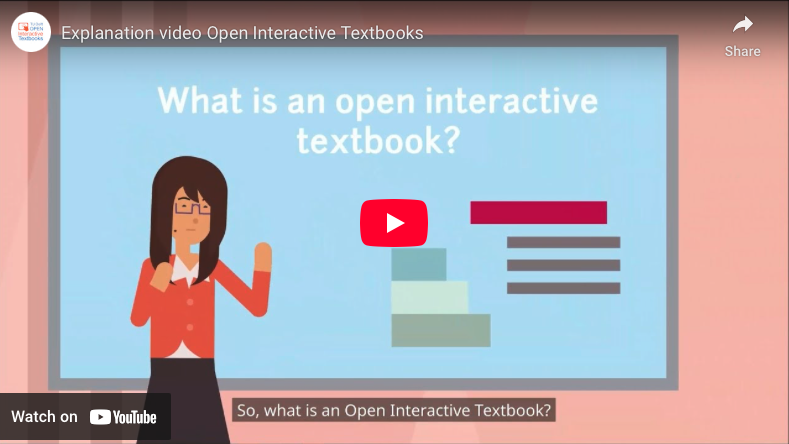
Why would I develop an Open Interactive Textbook?
In this short (4 min) animation we tell you all about it.
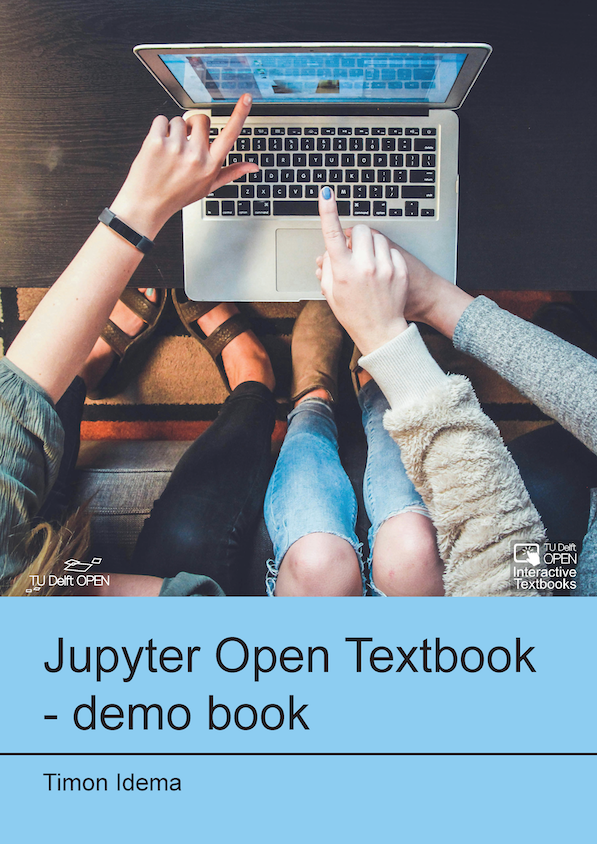
What are the possibilities of Jupyter books and what does an OIT look like?
Examples can be found in the demo book.
Where can I read more information about this (and other) Comenius grants?
On the Teaching Academy’s list of Comenius fellows.